Coastal Ocean Monitoring Center, National Cheng Kung University (COMC, NCKU)
Wave Runup Monitoring
1. Overview
Wave run-up, also known as wave uprush, refers to the phenomenon of waves climbing up a sloped coastal surface. The run-up height is defined as the vertical distance between the highest point reached by the water along the slopeand the still water level. Wave run-up is one of the key indicators used to evaluate coastal hazards such as toe scour and overtopping caused by typhoons or other severe weather events. It also serves as an important reference for the design and evaluation of seawall height. The wave run-up observation system is a measurement system installed on seawalls to monitor and record wave run-up height.
2. System Architecture and Specifications
The seawall wave run-up measurement system, developed by the COMC, is installed along the seaward face of the seawall (see Figure 1). The system consists of a series of conductivity sensors mounted at regular vertical intervals along the seawall surface, and a data recording and transmission system installed behind the seawall. Data are transmitted via 4G communication network equipment, providing near real-time measurement updates. The most significant improvement over traditional run-up measurement methods lies in the use of conductivity sensors as the detection instrument. This allows the system to distinguish between seawater and rainwater, preventing misinterpretation of wave run-up height during typhoon events with heavy rainfall.
Since the wave run-up process—from breaking waves to uprush along the seawall—is highly nonlinear, occurs within just a few seconds, and has complex waveforms, accurate data capture is crucial. To address this, the system developed by COMC operates with a sampling frequency of 2 Hz and continuous, uninterrupted data acquisition, enabling precise tracking of wave run-up evolution. This information can serve as an important reference for coastal early-warning systems and emergency response during extreme weather events.
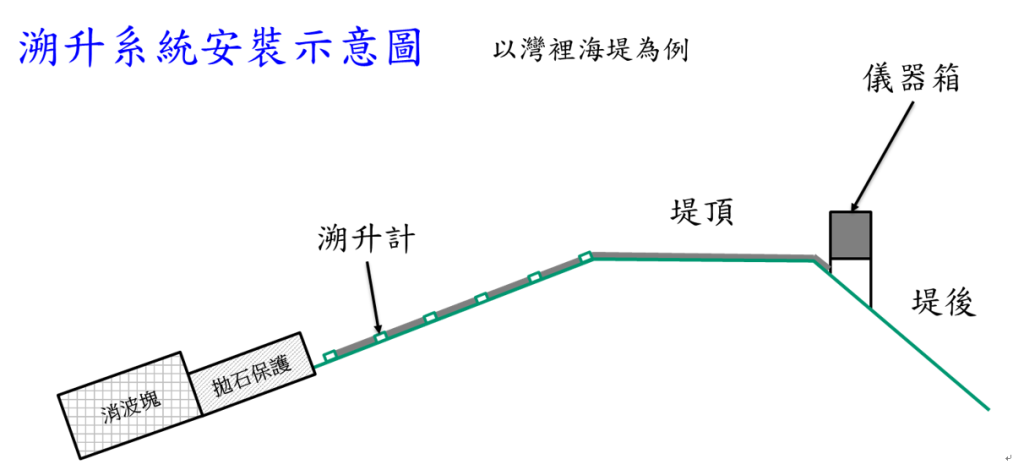
Figure 1. Schematic diagram of the wave run-up observation system installation.
The seawall wave run-up measurement system consists primarily of conductivity sensors and a data recording and control system. A brief description of the instrument specifications is provided below.
- Conductivity Sensor
- Measurement range: 200, 2000, 20000 µS/cm
- Accuracy: ±1 %
- Operating temperature: 0 ~ 80 °C
- Electrode pressure resistance: 5 kg
- Data Recording and Control System
- Power supply: DC 12 V
- Sampling frequency: Continuous observation at 2 Hz
- Automatic control of power switches for communication and sensing devices
- Automatic analysis and storage of maximum conductivity values and average voltage readings on memory cards
- Equipped with 4G transmission capability, allowing hourly data uploads
3. Observation Principle
The wave run-up observation system installs conductivity sensors at specific elevations on coastal structures. When seawater climbs up and submerges one or more sensors, the system records the corresponding conductivity values, from which the maximum run-up height can be determined. Additionally, since the wave run-up progresses from lower to higher positions, the lower sensors serve as verification points to ensure the accuracy of the higher-level readings.
4. Installation Process
The following photographs illustrate the installation process of the seawall wave run-up observation system at various monitoring stations.
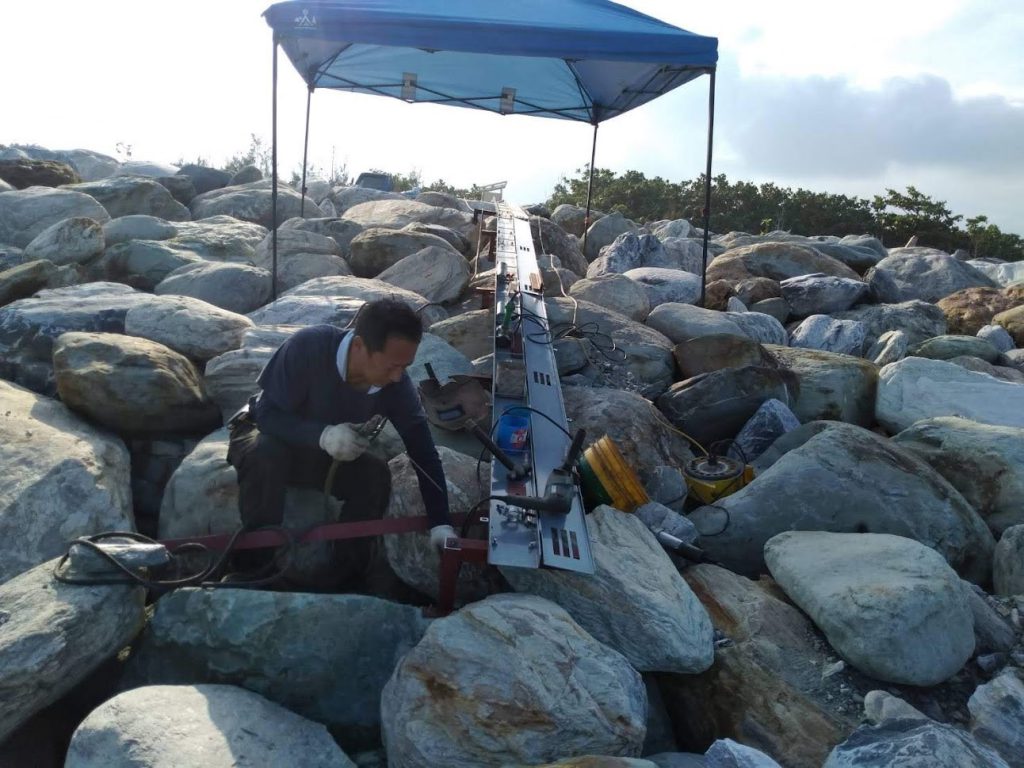
1. On-site assembly of the instrument box and installation of the run-up sensor protective frame on the seawall (Huarin, Hualien).
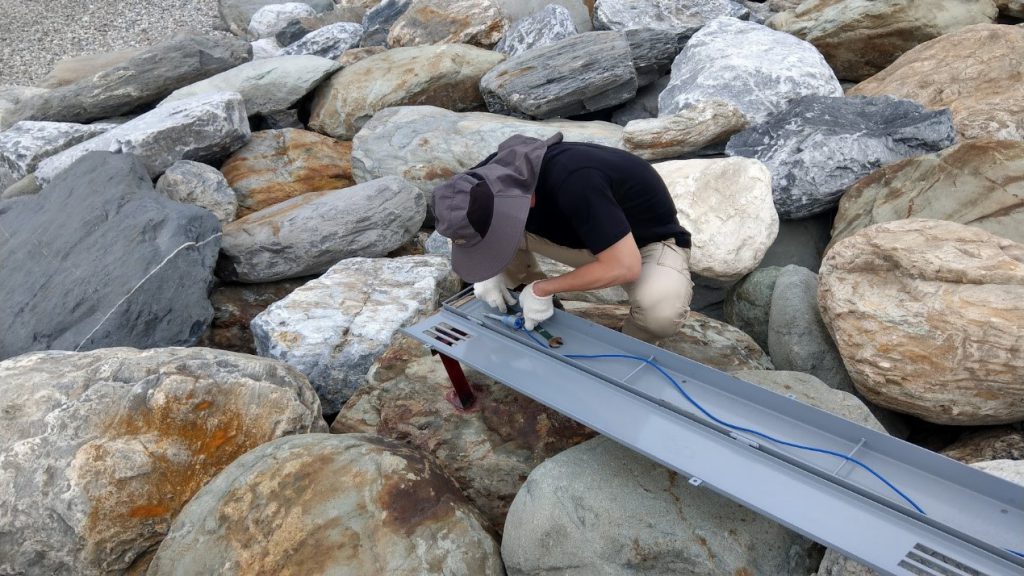
2. Installation of conductivity sensors on the run-up sensor mounting frame.
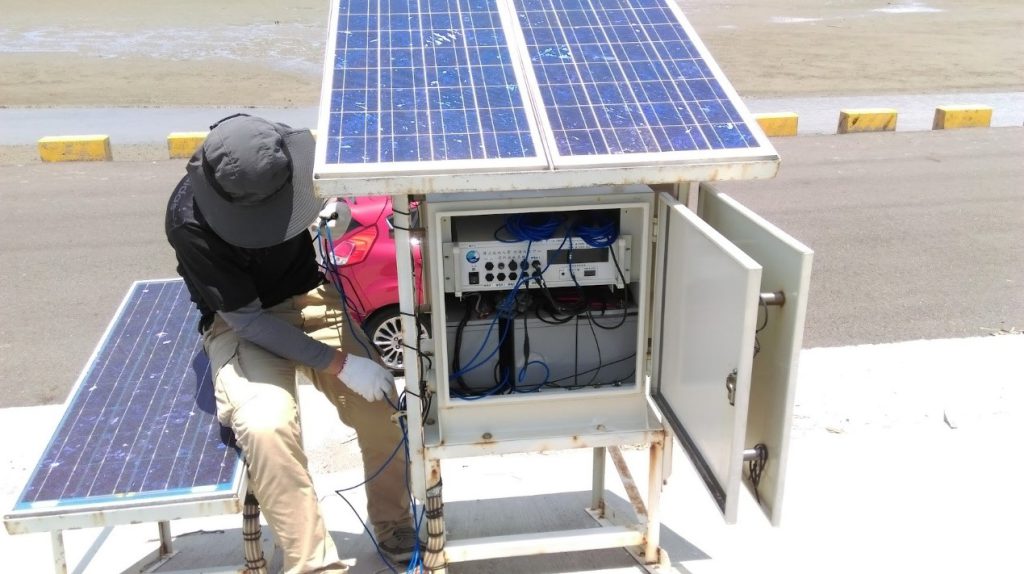
3. Assembly of the solar power unit and data recording and control system.

4. Measurement of the elevation of each conductivity sensor using e-GNSS equipment.
5. Observation Results
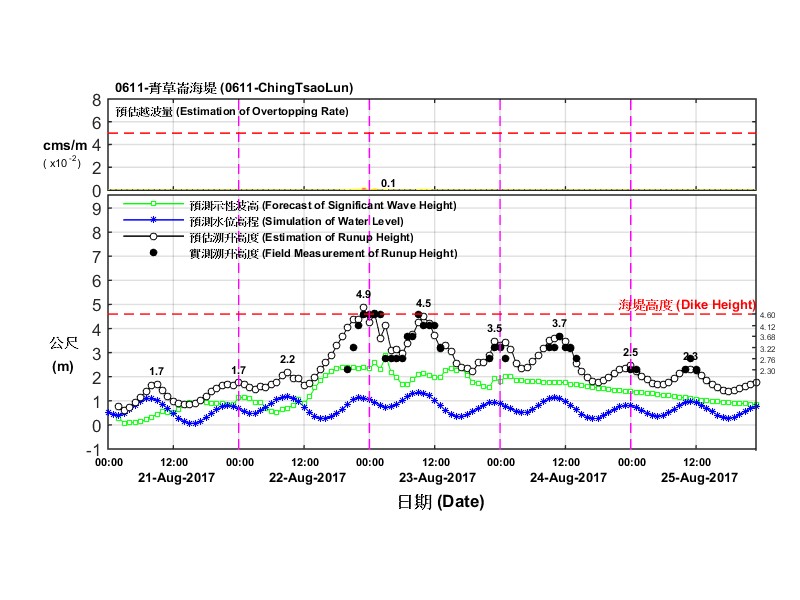
The field observations of wave run-up have been practically applied to the validation of numerical forecasting models, effectively improving the accuracy of run-up height predictions. In addition, the related research results have been published in an international journal in the field of ocean engineering — Coastal Engineering, demonstrating international recognition of the study (Ching-Jer Huang, 2020).