Coastal Ocean Monitoring Center, National Cheng Kung University (COMC, NCKU)
Quality Control Methods and Standards
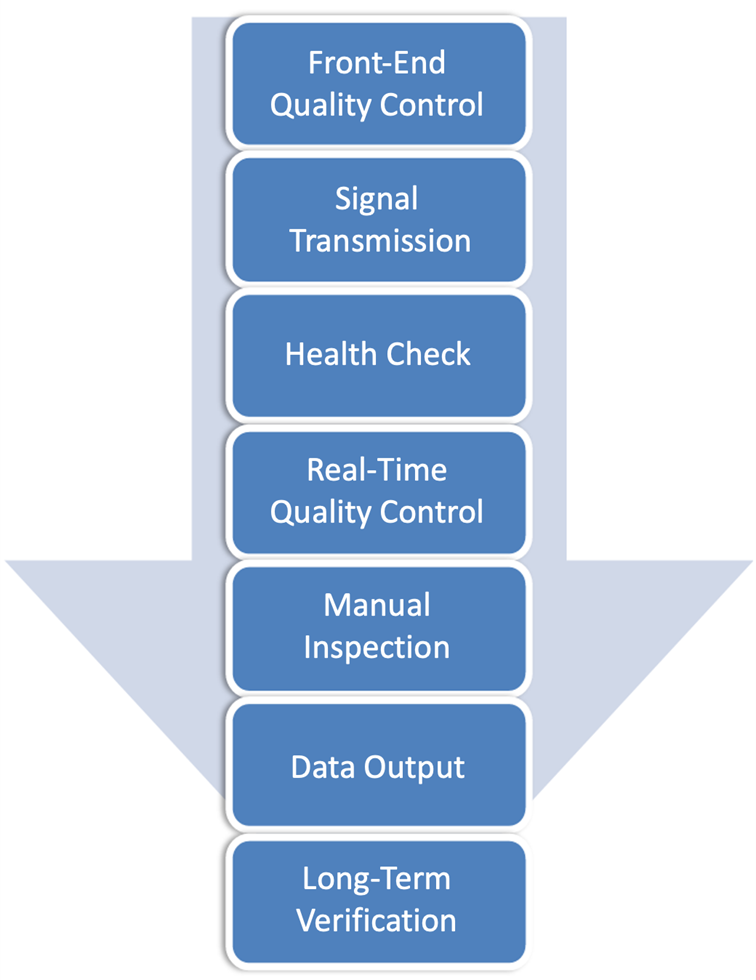
The quality of observational data is one of the key factors determining the reliability of monitoring results. Inaccurate or erroneous data can directly affect decision-making and engineering design outcomes. Coastal and ocean monitoring data undergo a complex process — from observation, encoding, transmission, reception, and decoding to storage — during which data errors or losses may occur due to instrument malfunctions, human error, or unknown external interferences. To ensure the accuracy and reliability of observational data, the COMC initially adopted the quality control (QC) standards and procedures of the U.S. National Data Buoy Center (NDBC). In recent years, the Center has also incorporated guidelines from the U.S. Integrated Ocean Observing System (IOOS) Quality Control Manual. By combining automated QC procedures with manual review by experts, and integrating analyses based on long-term in situ marine meteorological observations collected around Taiwan, COMC has developed a localized coastal and ocean data quality control system tailored to Taiwan’s marine conditions. This system effectively regulates data quality and ensures the accuracy and consistency of all observational datasets.