
國立成功大學 近海水文中心
Coastal Ocean Monitoring Center, National Cheng Kung University (COMC, NCKU)
Coastal Ocean Monitoring Center, National Cheng Kung University (COMC, NCKU)
Underwater Acoustics
Acoustic waves propagate much more efficiently in water than light waves, allowing transmission over significantly longer distances—sometimes reaching several thousand kilometers under favorable conditions. This characteristic makes acoustic waves an effective tool for studying physical, chemical, and biological processes in the ocean. The speed of sound in seawater varies with temperature, salinity, and pressure (depth), resulting in a non-uniform vertical sound speed profile. Consequently, acoustic waves propagate at different speeds within the ocean. In stratified waters, variations in sound speed can lead to the formation of acoustic shadow zones. Within these zones, sound energy is significantly reduced, making it difficult for acoustic signals to propagate outward. As a result, shadow zones often serve as favorable hiding regions for marine organisms or naval vessels.
To investigate the vast ocean environment, hydrophones are widely used to monitor and analyze oceanic sounds. Before conducting acoustic studies, it is essential to understand that ocean ambient noise arises from a variety of complex sources, including biological activity, wind waves, and shipping. Ocean ambient noise exhibits significant temporal variability, with patterns that differ across diurnal cycles, months, and seasons.
In the waters surrounding Taiwan, major sources of ocean ambient noise include ocean turbulence, vessel traffic, wind waves, rainfall, and marine organisms. Shipping noise is typically dominant in the frequency range of 10–50 Hz. Rainfall noise is generated by raindrops impacting the sea surface and the subsequent formation of air bubbles, with frequencies mainly concentrated between 100 and 3,000 Hz. Noise generated by wind waves spans a broader frequency range, approximately from 50 Hz to 50,000 Hz. In ocean acoustics research, the ocean noise spectrum proposed by Wenz in 1962—commonly known as the Wenz curve—provides a systematic representation of noise levels across different frequency bands for various sound sources. This framework has become a fundamental reference, enabling researchers to better identify and classify ambient noise in marine environments.
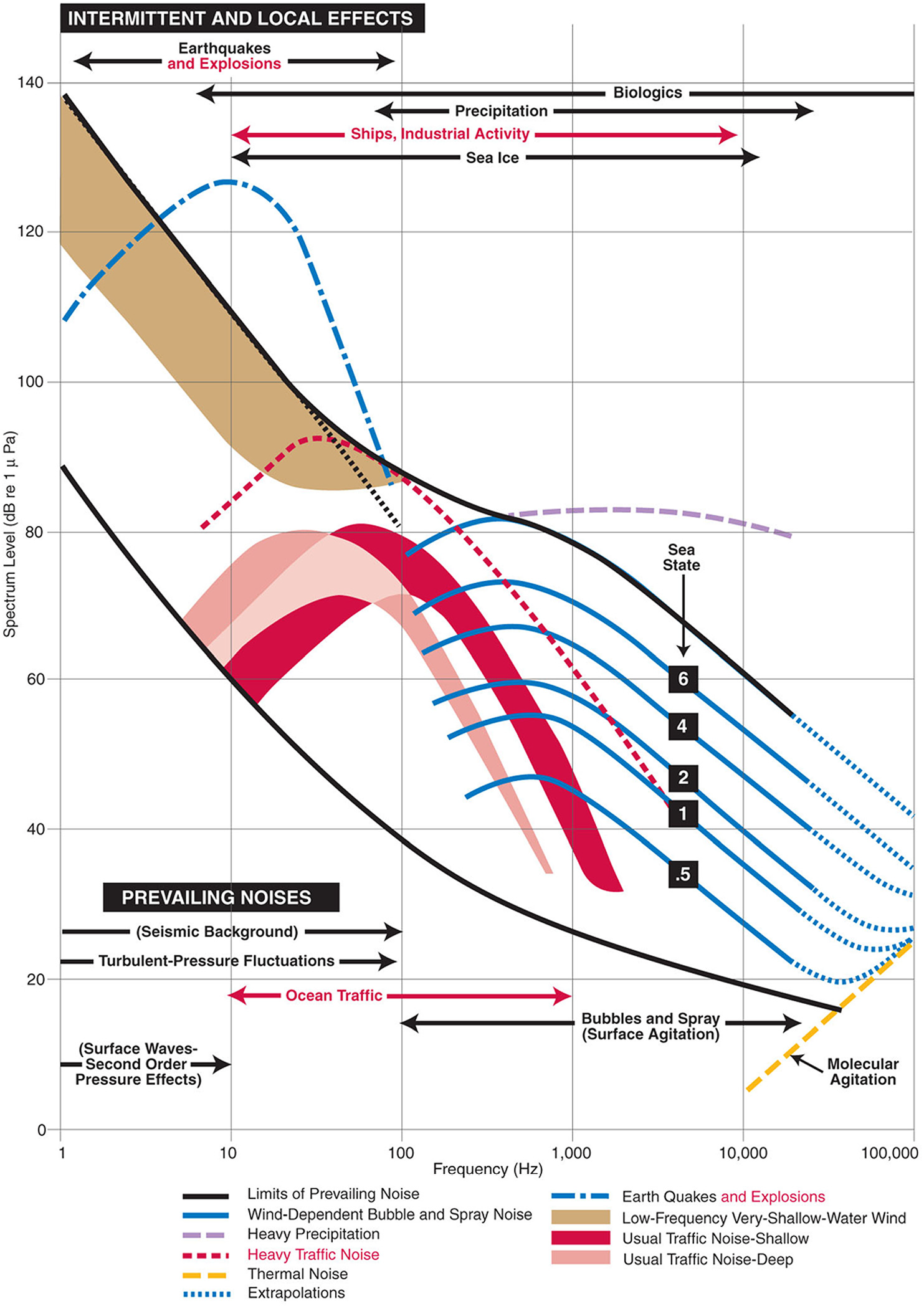
Ocean ambient noise spectrum (Wenz curve) (adapted from Wenz, 1962; redrawn by Miksis-Olds et al., 2013).
Reference
- Wenz, G. M. (1962). Acoustic Ambient Noise in the Ocean: Spectra and Sources. J. Acoust. Soc. Am., 34, 1936-1956. https://doi.org/10.1121/1.1909155.
- Miksis-Olds, J. L., Bradley, D. L., and Maggie Niu, X. (2013). Decadal trends in Indian Ocean ambient sound. J. Acoust. Soc. Am., 134(5):3464–3475. 41, 42, 56.