Coastal Ocean Monitoring Center, National Cheng Kung University (COMC, NCKU)
Microwave Radar System
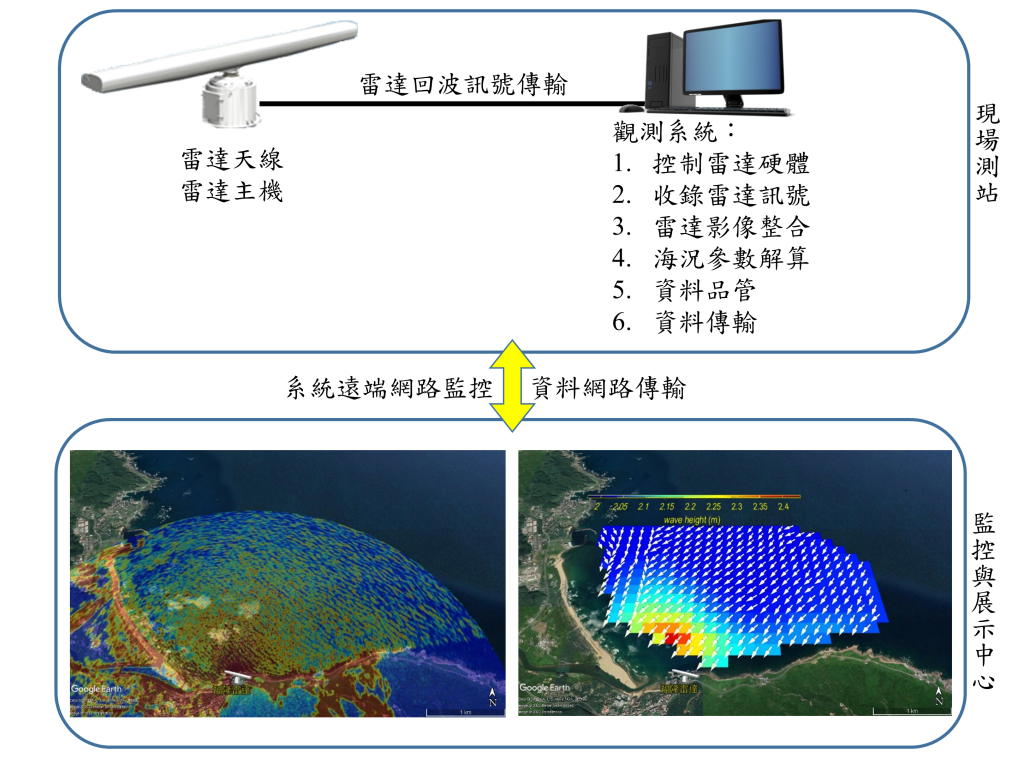
The microwave radar ocean remote sensing system is one of the latest ocean observation technologies in the world. By combining conventional marine navigation radar equipment with signal sampling and analysis technologies, the monitoring capability of microwave radar can be extended to observe various ocean surface conditions. The advantages of this ocean monitoring technology include:
- Unlike in-situ monitoring stations that measure temporal variations of sea conditions at a single point, microwave radar can observe spatial variations of the sea surface. Together, they provide a complementary “point–area” coverage of ocean conditions.
- The observation equipment can be mounted on ships or installed on land, making installation simple and convenient, with lower maintenance costs compared to offshore instruments.
- When the radar system is installed on the coast, it is less affected by marine forces, thereby eliminating the risks associated with offshore operations.
- The system uses active electromagnetic waves to monitor the sea surface, enabling uninterrupted day-and-night observations.
Originally, this type of microwave radar was used solely as marine navigation equipment and did not possess the capability to monitor ocean conditions. To extend its functionality for ocean monitoring, it is necessary to integrate automatic control, high-speed sampling, image processing, and spectral analysis technologies. At the current operational stage, the system can analyze wave fields, sea surface current fields, and seabed topography and depth. By leveraging the radar’s ability to operate continuously over long periods, the system provides valuable insights into wave climate patterns and seabed topographic changes in specific coastal regions, thereby enhancing coastal management and planning capabilities.
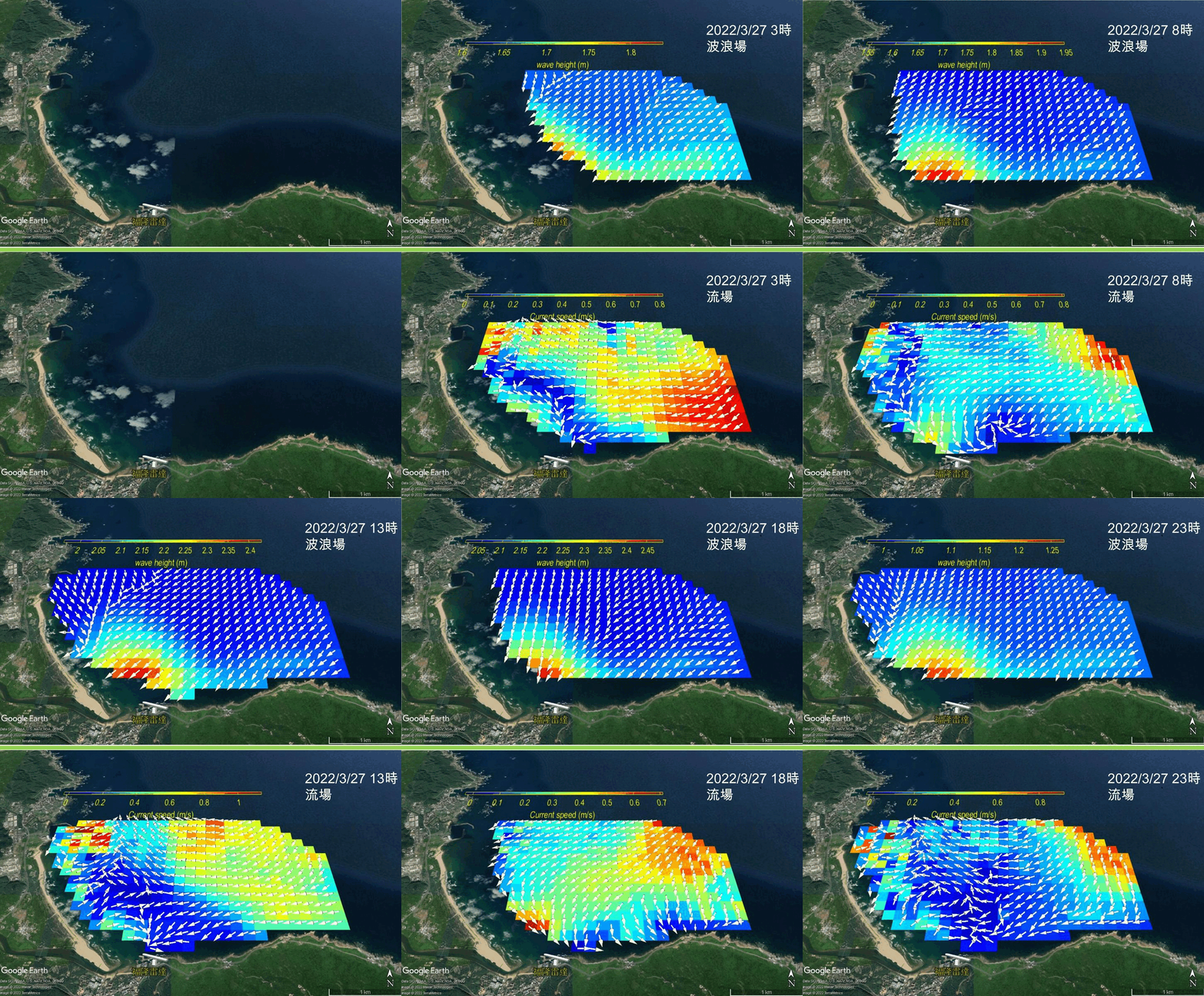
Fulong Microwave Radar Station
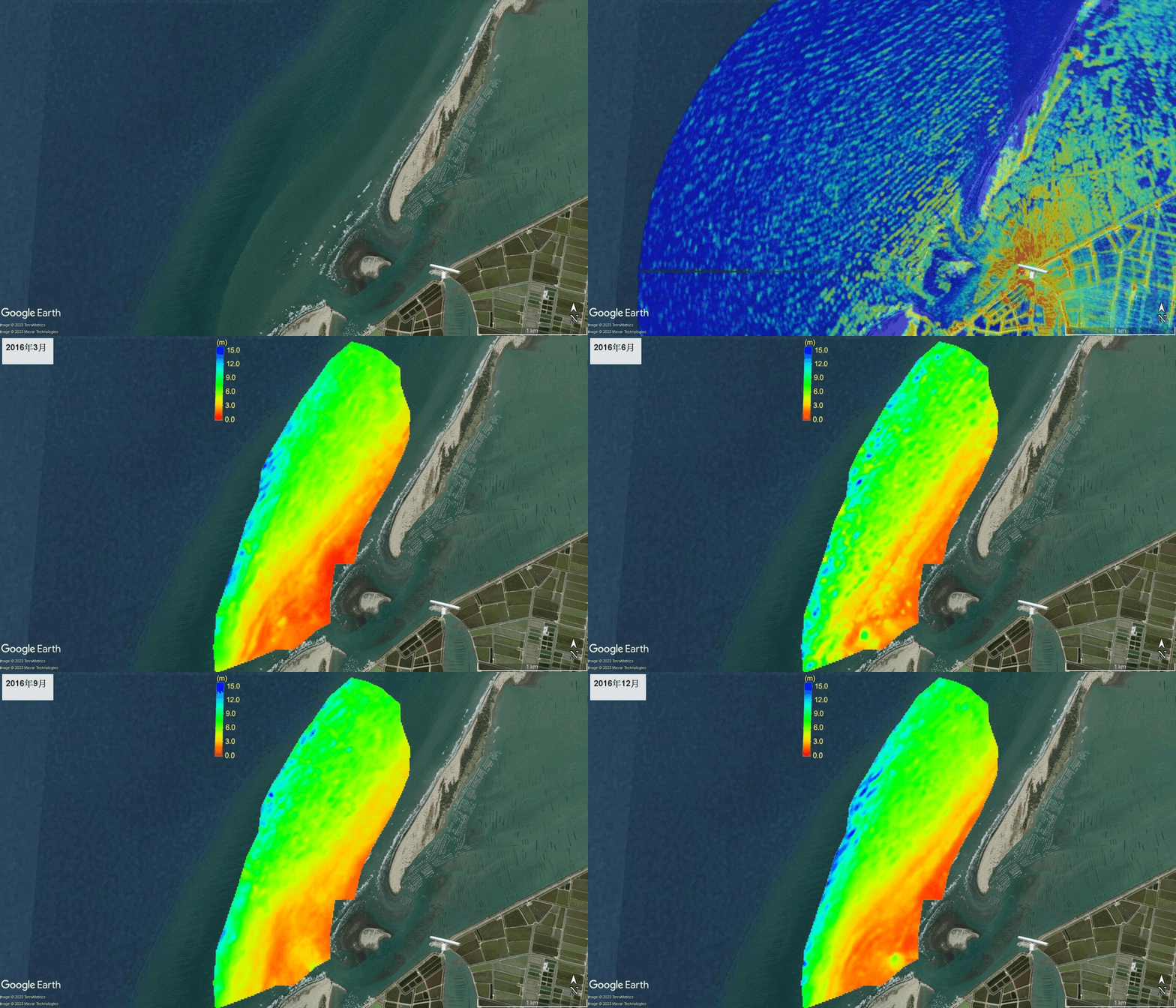
Qigu Microwave Radar Station
Since the microwave radar ocean remote sensing technology was first proposed in the 1980s, it has been actively developed by research institutions worldwide. The Coastal Ocean Monitoring Center (COMC) has been engaged in the research and development of this remote sensing technology for more than 20 years. COMC has independently developed the core technologies required for this system — including radar hardware control, echo signal acquisition, system integration, and ocean parameter retrieval — and has obtained several new patents for its innovations.